


Innovations in Super High-Cycle Molding Technology: The Secret to Maximising Production Efficiency
In the manufacturing industry, shortening product molding cycles is a key factor in enhancing competitiveness. Against this backdrop, attention is focusing on ‘super high-cycle molding’, which further enhances conventional high-cycle molding. This technology is a comprehensive system designed to dramatically improve productivity. In this article, we provide a detailed overview of the fundamentals of super high-cycle molding, mold design, requirements for molding machines, and success stories.
What is Super High-Cycle Molding?
Super High-Cycle Molding is a comprehensive system that holistically improves all elements necessary to shorten the molding cycle. It requires not only increasing the speed of the molding machine but also optimising material selection, mold design, molding conditions and peripheral equipment.
Elements of Super High-Cycle Molding
1. Material Selection

Improved flow and demouldability: Select materials that are easy to mold and cure quickly
2. Optimisation of molding conditions

Control of molding temperature and pressure: Optimising resin and mold temperatures through CAE analysis to reduce cooling time
3. Improvements to mold design

Revision of cooling circuit design: We design complex cooling circuits using turbulent cooling circuits and 3D printing technology to significantly improve cooling efficiency.
Development of molds suitable for high-speed opening and closing: We use high-rigidity materials to minimise mold deformation.
4. Improvements to the runner

Considerations for runnerless systems: By adopting valve-gated hot runners,
filling efficiency is improved, runner cooling is eliminated, and mold opening and closing cycles can be shortened.
Requirements for super-high-cycle injection molding machines

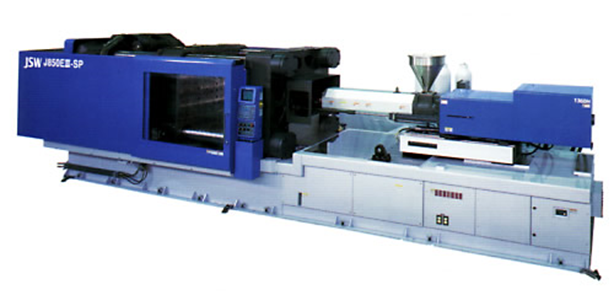
High-cycle molding requires not only molds designed for high-cycle operation, but also the introduction of injection molding machines developed specifically for high-cycle applications, covering everything from injection and metering to mold opening and closing.
Injection molding, with its ability to perform continuous molding using combinations tailored to each specific product—such as the injection mechanism and mold opening and closing mechanism—enables cycle times to be reduced to the absolute minimum.
High-speed injection and mold opening and closing
It supports high-speed operation with an injection speed of 0.5 seconds or less, and mold opening and closing are also performed in a short time.
High-rigidity clamping unit
A clamping unit capable of withstanding the pressure during molding is employed.
High-speed plasticising capability
Equipped with a high-performance screw that shortens the process from resin melting to injection.
Low-noise, space-saving design
Designed with the factory environment in mind to improve operational efficiency.
Success Story: Sanko Gosei’s Track Record
Sanko Gosei has achieved a maximum 3.7-fold increase in production efficiency through the introduction of the Super High-Cycle Molding method. The following product examples are representative of this.
IMARI TUBE Products (YMC)
Molding cycle: 65 seconds → 18 seconds
Production capacity: 48,000 units per month → 176,000 units (3.7-fold increase)
T Container (HI-PS)
Molding cycle: 28 seconds
Monthly production capacity: 130,100 units
HSG LWR CTRG (ABS)
Molding cycle: 15 seconds
Monthly production capacity: 404,800 units
HSG UPR CTRG (ABS)
Molding cycle: 10 seconds
Monthly production capacity: 404,800 units
These results were achieved through the introduction of the Super High Cycle Molding method.
Summary
Super High Cycle Molding technology is a comprehensive solution that minimises molding cycles to the absolute limit by optimising every stage of the process—not merely by increasing the speed of the molding machine, but also through optimising mould design, molding conditions, material selection and the coordination of peripheral equipment.
As this technology continues to evolve, it is set to contribute to improved productivity across a wide range of manufacturing industries. Companies aiming to enhance production efficiency are strongly encouraged to consider adopting this groundbreaking technology.



Comments